

I’m not usually into the fantasy / horror genre, but Leviticus, a new Australian queer film written and directed by Adrian Chiarella, continues to occupy my thoughts long after leaving the cinema. What I find most compelling about Leviticus is that the horror is not really about supernatural demons. It is about conversion therapy, religious conditioning and something many LGBTQ+ people know intimately: what happens when they teach you that who you are is wrong.
Leviticus follows two young men, Naim (played by Joe Bird) and Ryan (Stacy Clausen) who find each other within a brutal religious culture where same-sex attraction is condemned as sinful. What unfolds is a supernatural story that the audience can interpret in different ways. As a queer therapist, I found myself viewing the film through the lens of conversion therapy, religious conditioning and the lasting effects of shame.
Importantly, Leviticus is not a documentary. It’s a fantasy horror movie which is both a love story and an allegory. Different viewers will take away their own interpretations. You can watch the official trailer here:
Conversion Therapy Makes You Mistrust Yourself
Gay men recovering from religious trauma often commence therapy with a deep mistrust of themselves. Many have spent years being taught that external authorities know better than they do. The church knows better. The pastor knows better. The doctrine is not to be questioned. Your feelings and attractions cannot be trusted. Your instincts are wrong.
Over time, this creates a split between what a person experiences and what they believe they are allowed to experience. A young queer person may know exactly who they are attracted to, yet simultaneously believe that acknowledging those feelings makes them sinful or broken.
Formal conversion therapy attempts to suppress sexual orientation directly whereas general religious conditioning achieves the same outcome more subtly. The message is clear: do not trust yourself.
Many of the people I work with are not trying to discover who they are. They are trying to recover the ability to trust what they already know about themselves.
Contact me to make an appointment
Conversion Therapy, Exorcism and Religious Conditioning
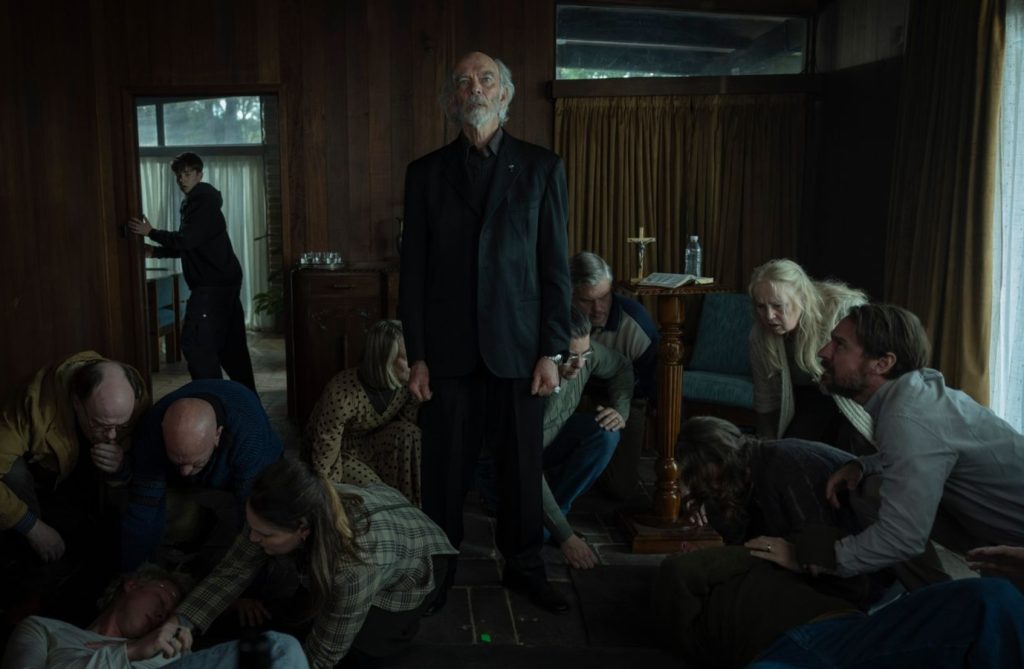
The Leviticus film inevitably brings to mind the history of conversion therapy and other attempts to change LGBTQ+ people. There’s even an exorcism performed by a Deliverance Healer, played with unsettling conviction by Nicholas Hope (Bad Boy Bubby).
Despite its name, so-called “conversion therapy” is not actually therapy. It is a collection of practices intended to suppress or change a person’s sexual orientation or gender identity. Major medical and mental health organisations, like the American Psychological Association and the Australian Psychological Society, have rejected these practices as ineffective and potentially harmful. There is no science in it. It is simply indoctrination.
When people hear the term conversion therapy, they often think of organised programs or religious interventions like those conducted within pentecostal communities. But the psychological effects can begin long before any formal process. For example, a person may spend years hearing sermons about sin. The church, religion or cult may tell them that homosexuality represents temptation, weakness or spiritual failure. They may learn to monitor their thoughts, feelings and desires constantly.
This is how religious conditioning and indoctrination become internalised.

Religious Trauma and Mental Health
I found Leviticus compelling because it can be understood as a story about the consequences of being taught not to trust your own reality. In mental health practice, we sometimes encounter scrupulosity, a form of obsessive guilt or anxiety focused on moral or religious concerns. And many gay men suffer from feeling not good enough as a result of their religious upbringing.
We also see the effects of religious trauma more broadly: anxiety, depression, shame, guilt, sexless relationships, dissociation, panic attacks and chronic self-doubt. Some individuals may also experience psychosis in which religious themes become intertwined with delusional beliefs or altered perceptions of reality.
Just to be clear, religious belief does not necessarily cause psychosis. However, trauma, coercion, fear, social isolation, sleep deprivation and prolonged psychological stress can contribute to vulnerability in some people. When psychosis does occur, it is not uncommon for it to adopt religious themes.
One interpretation of Leviticus is that it explores what happens when people are repeatedly taught not to believe their own experience. What happens when your authenticity becomes dangerous? What happens when self-trust is replaced by blind, unquestioned obedience? Religious indoctrination can take the form of gaslighting, a form of manipulation employed to stop you trusting yourself.
Book a session with a queer therapist
The Horror Begins After the Intervention
Without giving anything away, I found it difficult to ignore the fact that the paranormal events in Leviticus emerge following a religious intervention in the form of an exorcism.
The implication, at least for me as a therapist, was clear. The danger was never the young men. The threat emerged in the attempt to change them. That is what makes Leviticus more than simply a queer horror film. It becomes a critique of the systematic abuse that places ideology above human experience.
Leviticus, Religious Trauma and Recovery
The Leviticus film does not need to be read as an attack on faith itself. Many LGBTQ+ people maintain meaningful spiritual or religious lives. Others leave organised religion entirely. You can view the film not as a critique of spiritual beliefs, but as a critique of systems that demand conformity and deny your selfhood.
As a secular therapist, I often see the long-term effects of religious trauma and religious conditioning. Recovery from religious trauma frequently involves examining beliefs that were inherited rather than chosen. Recovery is also about rebuilding trust in one’s own thoughts, feelings and identity.
In a recent interview with The Guardian, director Adrian Chiarella argued that Leviticus is not simply about conversion therapy but any attempts at coercive interventions directed at LGBTQ+ young people.
A Final Word About Conversion Therapy
If you have experienced conversion therapy, religious trauma, spiritual abuse, exorcisms or growing up in a community which framed homosexuality as sinful, you may find parts of Leviticus confronting. But the film is fiction. It is fantasy, horror and intended as entertainment.
Still, the emotional realities that sit beneath the story are recognisable to many queer and gay men and LGBTQ+ people generally who have spent years trying to reconcile their identity with religious conditioning.
Take care if you decide to watch it.

If the film stirs up old experiences of shame, fear or confusion, remember that recovery from religious indoctrination is possible. Many people spend years learning not to trust themselves. Therapy can be a place to begin trusting yourself again.
Contact me for more information or to book an appointment.
Featured image credit: Ben Saunders